
Artivist Theater Clubs for High Schools

A flexible theater program for LAUSD high school students based on UCLA’s proven arts-based education model
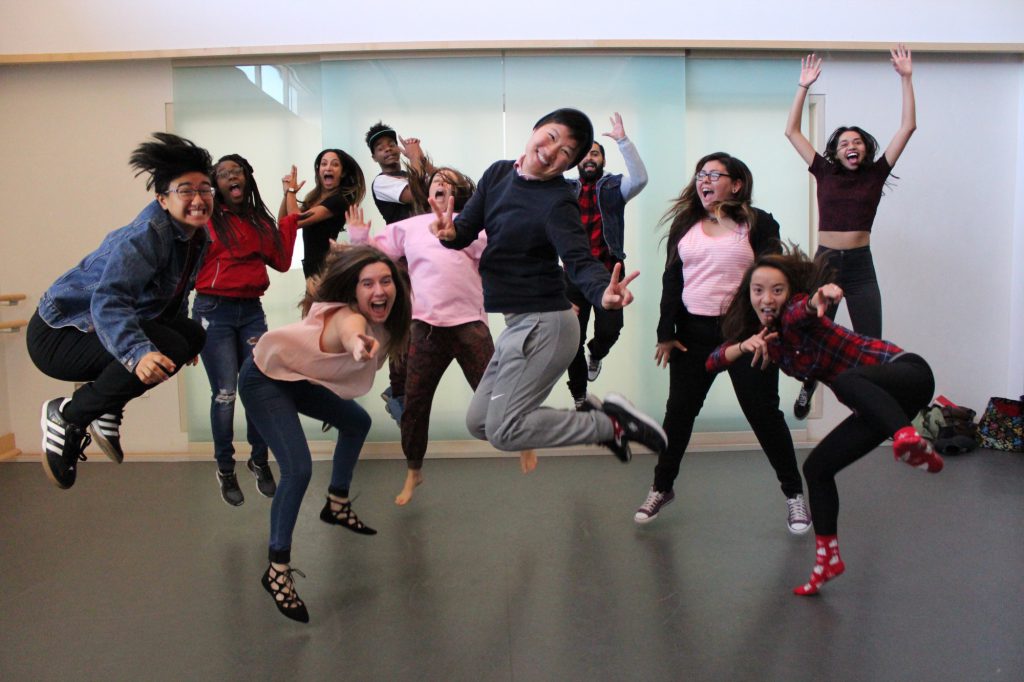
About

Bring an Artivist Theater Club—a space for young people to combine art and activism (“artivism”)—to your LAUSD high school. Students will create bold, funny, and honest performances about mental health, sexual health, identity, relationships, empowerment, and other issues affecting their communities. The club draws on the proven UCLA Sex Squad model, which has used humor, theater, storytelling, and peer education to engage Los Angeles students since 2009.

  • Length of availability: The full school year (2026-2027)
  • Location: Your LAUSD high school
  • UCLA Art & Global Health Center staff support: Guidance and facilitation at every club meeting
  • Creative goal: Develop, rehearse, and perform an original artivist theater show to open up dialog in the campus community about issues that matter.
  • Intended performance debut: The week of Valentine’s Day

Through games, skits, writing, improvisation, research, and conversation, club members will transform the issues they care about into original performances and discover how their creative voices can become tools for advocacy, health education, social justice, and meaningful community dialogue.

Throughout the school year, the UCLA Art & Global Health Center will provide guidance and facilitation at every club meeting, supporting students from their first ideas through the creation and performance of an original show. No previous theater experience is necessary. Students simply need to bring their voices, perspectives, and willingness to participate.

This program is offered with the approval and support of the LAUSD HIV/AIDS Prevention Unit.

Frequently Asked Questions

The club is designed for LAUSD high school students. Students with any level of theater experience are welcome, including those who have never performed before.

No. The UCLA Art & Global Health Center will guide the club from start to finish using the Sex Squad model. Students will receive support as they build an ensemble, choose topics, write material, rehearse, and prepare for their final performance.

Students participate in theater games, improvisation, writing exercises, research, conversation, and rehearsals. Over time, these activities are developed into original scenes and performances addressing issues that matter to young people.

The club works toward a collaborative culminating performance, but students can contribute in different ways. The UCLA Art & Global Health Center will help each participant find a meaningful role within the ensemble.

Students will develop confidence, creativity, communication skills, health knowledge, and experience working as part of an ensemble. They will also learn how performance and personal storytelling can educate audiences, inspire change, and encourage meaningful dialogue. With full participation, students receive a certificate of completion that confirms and celebrates their role as a youth educator and performer.

Yes. The Artivist Summer Theater Workshop is a one-week intensive held at UCLA. The Artivist Theater Club meets at your LAUSD high school throughout the school year, giving students more time to build an ensemble and develop an original show. Both programs use the proven Sex Squad model and explore similar themes through theater, conversation, and creative collaboration.

Yes. We have consulted with the LAUSD HIV/AIDS Prevention Unit through every stage of development and have full support and approval. The program is a part of the part of the LAUSD Arts Community Network (formerly Arts Bench).

Contact

Interested in creating an Artivist Theater Club at your LAUSD high school? Contact Isaiah at ibaiseri@ucla.edu to begin the conversation.


Learning Objectives

  • Demonstrate an understanding of mental health, sexual health, HIV and STIs, identity, and empowerment by creating and sharing artivist performances addressing these topics.
  • Identify health and social issues affecting young people in Los Angeles and use research, discussion, and personal insight to develop creative responses.
  • Explore theater, humor, storytelling, and personal narrative as tools for education, dialogue, advocacy, and social change.
  • Collaboratively create, rehearse, and present an original educational performance.
  • Develop the skills and responsibilities of an ensemble member, including communication, collaboration, time management, punctuality, and performance preparedness.
  • Build confidence in expressing ideas, sharing personal perspectives, and engaging audiences in conversations about issues that matter to young people.

Educational Standards Alignment

The Artivist Theater Club supports California’s current standards and instructional frameworks for high-school Theatre and Health Education. Through research, collaborative creation, rehearsal, and performance, students develop artistic skills while exploring healthy relationships, mental and sexual health, identity, communication, advocacy, and community well-being.

The program aligns with the 2019 California Arts Standards for high-school Theatre and the instructional guidance in the 2020 California Arts Education Framework—Chapter 6: Theatre. High-school Theatre standards are organized by Proficient, Accomplished, and Advanced achievement levels rather than individual grades. Relevant Proficient standards include:

  • Prof.TH:Cr2 — Creating: Develop dramatic concepts through cultural analysis and investigate the collaborative roles involved in creating theater.
  • Prof.TH:Cr3 — Creating: Rehearse and revise devised or scripted theater work while developing believable, authentic, and relevant performance choices.
  • Prof.TH:Pr5 — Performing: Practice acting techniques and use researched theatrical elements to strengthen a performance.
  • Prof.TH:Pr6 — Performing: Perform rehearsed theater work for a specific audience.
  • Prof.TH:Re8 — Responding: Analyze how personal experiences, cultural contexts, beliefs, and perspectives shape theater-making and audience responses.
  • Prof.TH:Re9 — Responding: Evaluate theater work in relation to its purpose, intended audience, cultural setting, and connections to other disciplines.
  • Prof.TH:Cn10 — Connecting: Investigate how community ideas, cultural contexts, and personal beliefs influence theater work.
  • Prof.TH:Cn11.1 — Connecting: Explore how cultural, global, and historical belief systems affect creative choices while practicing ethical responsibility throughout the production process.
  • Prof.TH:Cn11.2 — Connecting: Use research to understand artistic processes and the social and cultural backgrounds of theater work.

These standards are also reflected in LAUSD’s secondary Theatre programming and instructional resources.

California’s Health Education Content Standards were adopted in 2008 and remain the state’s current standards. The 2019 Health Education Framework for grades 9–12 provides updated instructional guidance for implementing them in accordance with current research, inclusive educational practices, and California law. Relevant standards include:

Growth, Development, and Sexual Health

  • 1.3.G: Discuss the characteristics of healthy relationships.
  • 1.7.G: Describe the short- and long-term effects of HIV, AIDS, and other sexually transmitted diseases.
  • 1.10.G: Recognize individual differences in development, appearance, gender roles, and sexual orientation.
  • 2.5.G: Evaluate how culture, media, and other people influence perceptions of body image, gender roles, sexuality, relationships, and sexual orientation.
  • 3.1.G: Analyze the validity of information, products, and services related to reproductive and sexual health.
  • 4.1.G: Analyze how interpersonal communication affects relationships.
  • 4.3.G: Demonstrate effective communication skills within healthy dating relationships.
  • 5.2.G: Examine barriers to making healthy decisions about relationships and sexual health.
  • 8.1.G: Encourage and support safe, respectful, and responsible relationships.
  • 8.2.G: Advocate respect for and the dignity of people living with HIV or AIDS.
  • 8.3.G: Support others in making positive and healthy choices about sexual behavior.

Mental, Emotional, and Social Health

  • 1.5.M: Describe how social environments affect health and well-being.
  • 7.4.M: Practice respect for individual differences and diverse backgrounds.
  • 7.5.M: Participate in school and community clubs, organizations, and activities.
  • 8.1.M: Support the needs and rights of others regarding mental and social health.
  • 8.2.M: Promote a positive and respectful environment at school and in the community.
  • 8.3.M: Object appropriately to teasing based on personal characteristics or sexual orientation.

Personal and Community Health

  • 8.1.P: Support health issues that promote community wellness.
  • 8.2.P: Encourage societal and environmental conditions that benefit health.

The club complements the comprehensive sexual health and HIV-prevention education required under the California Healthy Youth Act. Standards alignment does not independently establish that an extracurricular club fulfills LAUSD course-credit or mandated-instruction requirements. More information: LAUSD California Healthy Youth Act guidance